


Designing landscapes with beauty, ecology, and a strong sense of place
A full-service landscape architecture and planting design practice creating refined, naturalistic environments shaped by context, atmosphere, and experience.
Rewild Design creates landscapes that feel immersive, composed, and deeply connected to place. Each project is shaped through a close reading of land, architecture, ecology, and atmosphere, resulting in naturalistic environments that are both elegant and alive. Our work balances wildness with refinement, creating landscapes for beauty, memory, and long-term belonging.
Services
Landscape Architecture
Full-service landscape architecture for residential, hospitality, commercial, and cultural projects, rooted in ecology, atmosphere, and a strong sense of place.
Garden Design
Refined garden design shaped by beauty, seasonality, ecology, and sensory experience.
Planting Design
Naturalistic planting design that brings together beauty, biodiversity, seasonality, and long-term performance.
Ecological Landscape Design
Landscape design that supports biodiversity, pollinators, soil health, and ecological resilience without sacrificing beauty or refinement.
Residential Landscape Design
High-end residential landscape design for gardens, rooftops, courtyards, and estates shaped by beauty, ecology, and lifestyle.
Hospitality Landscape Design
Landscape design for hotels, restaurants, retreats, and hospitality spaces where atmosphere, identity, and guest experience matter.
Commercial and Retail Landscape Design
Commercial and retail landscapes that elevate experience, reinforce brand identity, and create a memorable sense of place.
Cultural and Institutional Landscapes
Landscape design for cultural and institutional spaces that require identity, public presence, and long-term performance.
Rooftop, Terrace, and Courtyard Design
Urban landscape design for rooftops, terraces, and courtyards with a strong emphasis on planting, privacy, atmosphere, and architectural integration.
Master Planning
Long-range landscape planning for estates, hospitality properties, and multi-phase sites requiring vision, structure, and ecological coherence.
Frequently Asked
About Rewild Design
What is Rewild Design?
Rewild Design is the design practice of Rewild Landscape, covering landscape architecture, planting design, and garden design from concept through construction documentation. The studio serves residential estates, hospitality venues, cultural institutions, and public realm projects across New York City, the Hamptons, and internationally, with ecological intelligence integrated into every design decision.
What kinds of projects does Rewild Design take on?
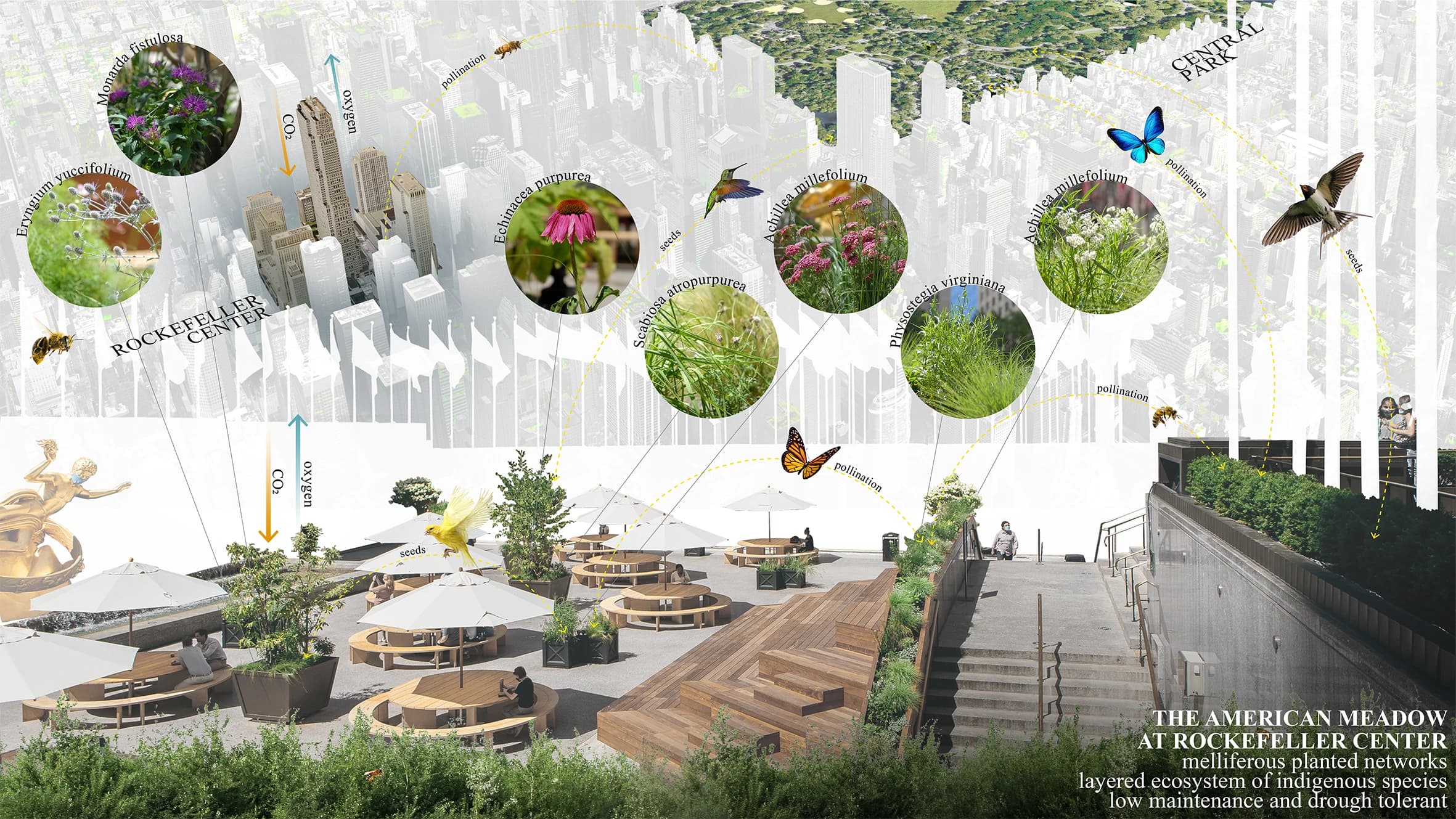
Rewild Design takes on residential gardens and estates, rooftops, terraces, courtyards, hospitality landscapes, cultural institution grounds, and public realm commissions. Notable work includes the Channel Gardens at Rockefeller Center, Cartier SoHo Terrace, and 144 Vanderbilt Avenue in Brooklyn. Project scales range from small urban courtyards to multi-acre country estates.
Where does Rewild Design work?
Rewild Design works across the Northeast United States, with primary focus on New York City, the Hamptons (East Hampton, Sagaponack, Bridgehampton, Southampton), Connecticut, New Jersey, and Massachusetts. The studio also takes select international commissions, including residential and cultural projects in France, the Cotswolds, and Asia.
How does Rewild Design differ from conventional landscape architecture?
Rewild Design integrates ecological intelligence from the first site visit rather than adding planting after the hardscape is resolved. Site analysis covers soil biology, hydrology, and native plant communities. Every decision — spatial, structural, horticultural — considers habitat, stormwater, and microclimate. The result is landscapes that deepen ecologically as they mature rather than decline.
The Rewild Family

Realization, refinement, and stewardship
Carrying the design through with precision, beauty, and care
A hands-on service guiding sourcing, planting, implementation, and the long-term evolution of the landscape.
Explore →
Focused guidance for landscapes with clarity and character
Strategic landscape insight for projects that need an experienced eye
A flexible advisory service for architects, designers, developers, and property owners seeking clarity, refinement, and ecological perspective.
Explore →