
144 Vanderbilt Avenue
Brooklyn, NY
2024-2025

Landscape design for 144 Vanderbilt Avenue in Brooklyn, as featured in The New York Times.
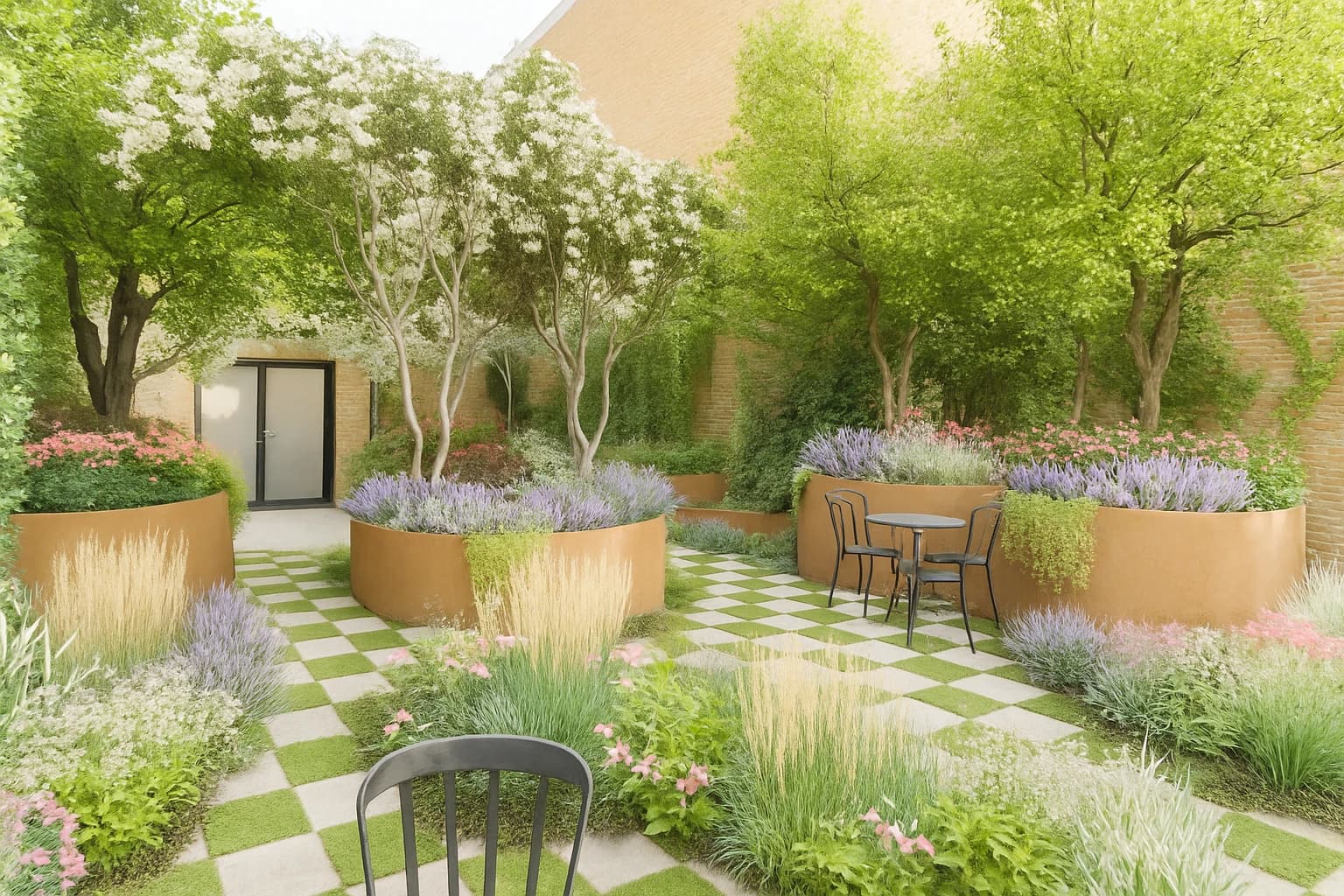
The 8-story development comprises 26 residences with more than 11,000 square feet of shared outdoor space, including a sixth-floor Sky Garden with Manhattan views, a Sunken Garden near the lobby entrance, and private terrace gardens on select units. Rewild's role spans street-level planting through these terrace gardens, integrating native and naturalistic plant communities with the building's architectural identity. Where many high-profile residential projects default to ornamental plantings, 144 Vanderbilt was conceived from the outset as a site where ecological function and design refinement should reinforce one another. Layered perennials, native grasses, and pollinator-supporting species extend the building's footprint into the streetscape, supporting urban biodiversity and creating year-round seasonal interest visible from sidewalk and terrace alike.
The project demonstrates a thesis Marie's studio has refined across its NYC, Hamptons, and international work: that residential landscape design at any scale benefits from being treated as a living ecological system rather than a static visual amenity. Soil composition, microclimate, hydrology, and the surrounding Fort Greene urban context all informed the plant palette. The terrace gardens were composed to mature meaningfully across seasons and years, not to look "finished" on installation day.
The New York Times coverage situates 144 Vanderbilt as a Fort Greene landmark and a signal of how the neighborhood's residential identity is shifting. Rewild's contribution to that shift is the landscape itself — a working demonstration that high-profile Brooklyn residential projects can lead on biodiversity, native planting, and ecological intelligence rather than treat those as add-ons.
The project sits alongside Rewild Landscape's other Brooklyn and NYC residential work, and connects to the studio's larger portfolio of marquee public-realm projects (Channel Gardens at Rockefeller Center, NYC Midtown Urban Rewilding) and luxury commercial work (Cartier SoHo Terrace, The Surrey Hotel). Across all of these, founder Marie Salembier brings the same rewilding-first design discipline: layered plant communities, native species where possible, ongoing stewardship, and a refusal to treat ecological function as decorative.
Category
residential
Frequently Asked
About 144 Vanderbilt Avenue
Who designed the landscape at 144 Vanderbilt Avenue in Brooklyn?
Rewild Landscape designed the planting and landscape for 144 Vanderbilt Avenue, the pink residential building in Fort Greene, Brooklyn, covered by The New York Times in 2024 in "The Pink Building That Is Changing Fort Greene." The project combines street-level planting with terraced gardens that extend the building's ecological footprint across the surrounding streetscape.
What is notable about 144 Vanderbilt Avenue's landscape design?
144 Vanderbilt Avenue's landscape is notable for integrating native planting with a high-profile Brooklyn residential development, using the building's pink facade as a backdrop for layered naturalistic gardens. The design supports urban biodiversity — pollinators, soil life, seasonal bird presence — while giving residents and passersby a garden that performs ecologically across Fort Greene's changing seasons.
What publications covered 144 Vanderbilt Avenue?
144 Vanderbilt Avenue was covered by The New York Times in 2024 under the headline "The Pink Building That Is Changing Fort Greene." The article positioned the project as a landmark of contemporary Brooklyn residential architecture, and Rewild Landscape's planting design was credited as part of what distinguishes the building from conventional new-construction towers in the neighborhood.